
Learner’s Mindset & Experienced Professionals
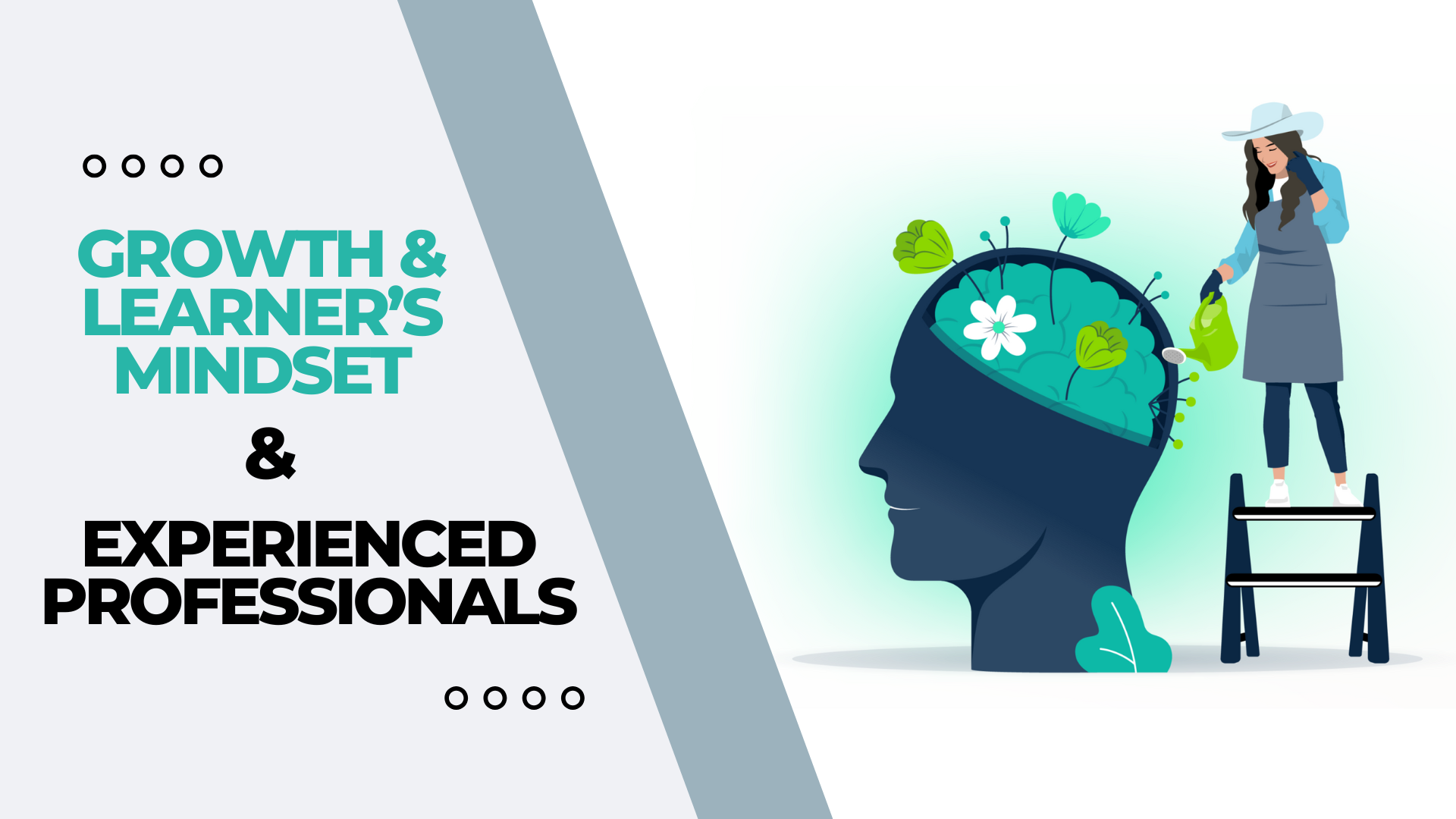
Have you ever led a training session or workshop where experienced professionals resist new ideas? They nod politely, but their expressions say, “I’ve seen this all before.”
In my project management workshops, participants are almost all experienced professionals. Most bring deep expertise and well-established thinking habits. Yet, some display a fixed mindset—believing that their past practices define their competence and that learning mainly serves to confirm what they already know.
In today’s dynamic business world, especially in project management, this mindset can limit growth and innovation. Helping professionals shift from a fixed to a growth mindset, and ultimately to a learner’s mindset, enables them to rediscover curiosity, question assumptions, and view mistakes as opportunities for improvement.
The following strategies can help instructors and learners guide that transformation.
1. Creating Awareness of Mindsets
At the beginning of a course or workshop, introducing the concepts of fixed, growth, and learners’ mindsets—alongside the learning objectives—helps participants recognize how these beliefs influence their professional development. Linking each mindset to real workplace situations helps learners see how their beliefs shape their behavior and openness to change.
When signs of a fixed mindset appear—such as resistance to feedback, overreliance on familiar approaches, or reluctance to explore new ideas—revisiting the mindset framework in a non-judgmental way can be effective. Sharing related real world stories, create opportunities for learners to challenge and shift their perspectives.
2. Modeling the Learner’s Mindset
As an instructor, demonstrating a learner’s mindset through facilitation can have a powerful influence on participants. Inviting feedback on instructional methods and showing openness to improvement exemplify humility and adaptability. Such modeling helps participants see learning as a continuous process, a journey along their careers, rather than a goal to be achieved.
3. Reframing Feedback into Feedforward
In many professional environments, feedback focuses on what went wrong. Reframing this into feedforward—a forward-looking approach—encourages participants to focus on improvement and future action. Asking questions such as:
“What could be done differently in the next sprint?”
“How might stakeholder communication be approached more effectively next time?”
shifts attention toward growth rather than criticism. This approach promotes engagement, reduces defensiveness, and strengthens motivation to apply new learning.
4. Encouraging Reflective Practice
Incorporating brief reflection moments throughout the sessions encourages participants to connect mindset concepts to their own experiences. Reflection after each session—on what was discovered, what challenged existing thinking, and how new insights can be applied—transforms technical knowledge into personal understanding. Such reflective practice deepens motivation and supports sustained professional growth. This reinforces the idea that adopting a learner’s mindset does not mean discarding experience—it means building upon it to remain adaptive and relevant in a changing environment.
5. Building Collaborative Learning Activities
Incorporating collaborative learning activities—such as group discussions, case studies, and simulations—fosters peer learning and the sharing of perspectives. When experienced professionals exchange diverse approaches and lessons learned, they recognize that there is rarely a single “right” way to solve a problem. This realization nurtures open-mindedness, curiosity, and respect for diverse perspectives—core elements of the learner’s mindset.
6. Recognizing and Reinforcing Growth
Acknowledging and celebrating visible signs of growth during the course reinforces the belief that development is both possible and valued. Recognizing moments when participants challenge assumptions, test new tools, or demonstrate openness to new perspectives validates their progress and encourages ongoing learning behavior.
Conclusion
Creating an environment that values curiosity, experimentation, and reflection supports the transition from a fixed mindset “I already know this” to a growth mindset “I can improve through effort”, and ultimately to a learner’s mindset “I am continually learning and adapting”.
In fields like project management—where uncertainty, change, and complexity are constants—cultivating this mindset is not only advantageous but essential for long-term success, adaptive leadership, and meaningful professional development.
What about you? How do you encourage lifelong learning and adaptability in your teams?